
48V 600Ah LiFePO4 Battery: Perfect Plug-and-Play Replacement for Heli CPD20 Forklift Lead-Acid Battery
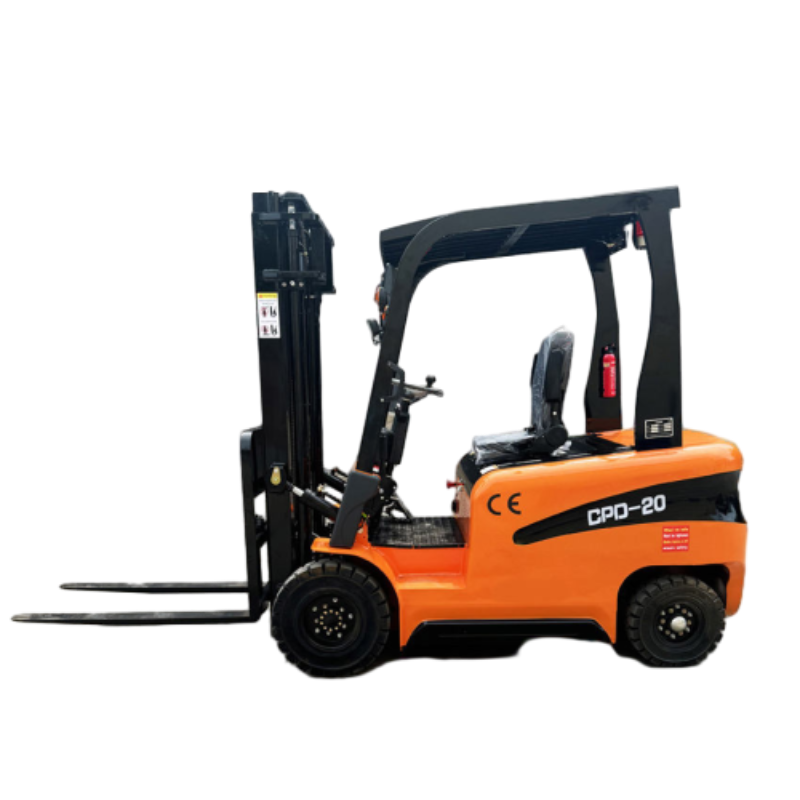
In warehousing logistics, port terminals, large factories, building materials markets, and other heavy-duty material handling scenarios, the Heli CPD20 series 2-ton counterbalanced electric forklift has become one of the mainstream choices in the domestic 2-ton electric forklift market. It stands out with its strong load-carrying capacity, stable working performance, and wide adaptability. Its market ownership has consistently ranked at the top of the industry for many years. For a long time, the factory standard configuration for the Heli CPD20 has been the 48V 600Ah traction-type flooded lead-acid battery, serving as the core power source for the vehicle and supporting various heavy-load and high-frequency operation needs. However, as companies continue to raise their requirements for operational efficiency, cost control, and safety compliance, the inherent defects of the original lead-acid battery — short lifespan, complicated maintenance, slow charging, insufficient real endurance, and obvious power attenuation — have gradually become the core pain points that restrict efficient enterprise operations and drive up overall costs.
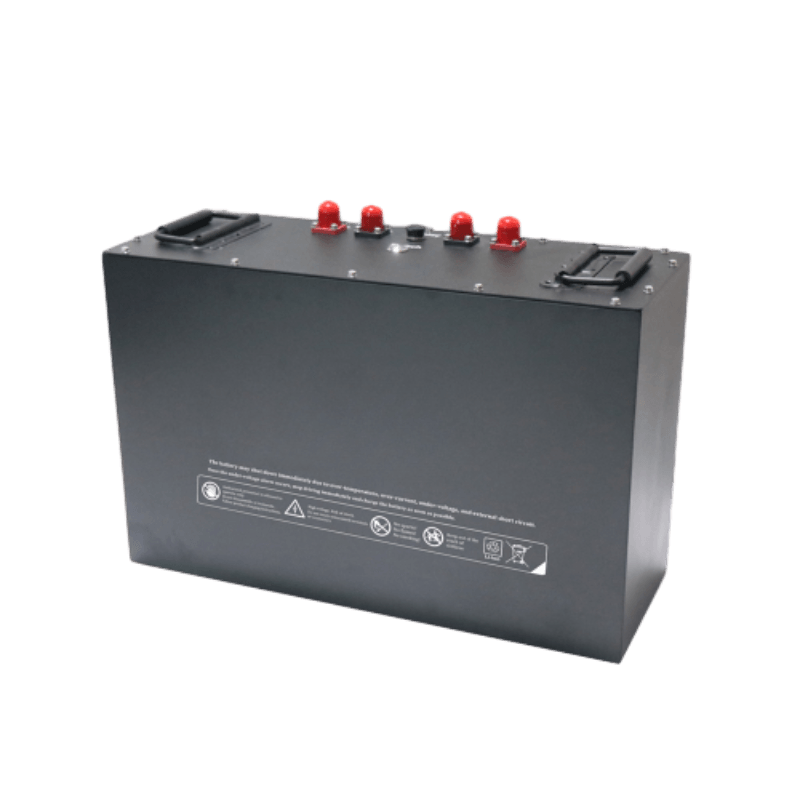
As a source factory specializing in the research, development, and production of power LiFePO4 batteries for industrial vehicles, we have developed a 48V 600Ah LiFePO4 battery specifically customized for the Heli CPD20 electric forklift. It strictly matches the original lead-acid battery across all key parameters, achieving a true 100% plug-and-play replacement. No body modifications, wiring changes, or controller adjustments are required — simply install and use. This article will completely break down the original Heli CPD20 lead-acid battery specifications, the core limitations of lead-acid batteries, the lithium replacement solution, pitfalls to avoid, and frequently asked questions, providing a one-stop solution for Heli CPD20 users seeking battery upgrades. It will also fully demonstrate the core advantages of the 48V 600Ah LiFePO4 battery, helping companies achieve improved efficiency, cost reduction, safety, and compliance.
Precise Matching: Complete Specifications of the Original Heli CPD20 Electric Forklift Lead-Acid Battery
To achieve a safe and perfect forklift battery replacement, the core prerequisite is 1:1 matching of the original battery’s hard parameters. The original factory standard traction-type flooded lead-acid battery for the entire Heli CPD20 series 2-ton electric forklift has highly consistent core specifications, with only minor adjustments in dimensions or capacity for a few customized models. The specific parameters are as follows — precise matching is required to achieve true plug-and-play replacement:
- Rated Voltage: 48V (Cannot Be Changed) The original lead-acid battery consists of 24 pieces of 2V lead-acid cells connected in series, with a full-charge voltage of approximately 55.2V and a discharge cut-off voltage of approximately 42V. This parameter directly determines the voltage tolerance threshold of the entire forklift electrical system and is a “red-line indicator” for battery replacement. The replacement battery must strictly maintain the 48V nominal voltage. Randomly replacing it with non-standard voltages such as 51.2V, 60V, or 72V will directly burn out the original Curtis controller, drive motor, instrument panel, and other core electrical components, resulting in high repair costs and even safety accidents.
- Rated Capacity: 600Ah (5-hour rate, C5 – Mainstream Standard) This is the core capacity specification of the original lead-acid battery for the Heli CPD20. The industry-standard matching models are 6PZB600, 5PZS600, or 24-6VBS600, which perfectly match the rated power requirements of the CPD20 forklift’s 12kW drive motor + 15kW lifting motor. A few high-configuration or customized versions of the CPD20 (adapted for heavy load or two-shift continuous operation) may use a 48V 630Ah lead-acid battery (models: 7DB630 / 9PZS630), with slightly higher capacity and corresponding increases in size and weight. However, the 48V 600Ah remains the most common and mainstream original factory standard capacity.
- Installation External Dimensions (Core Installation Standard) The battery compartment dimensions for the standard body version of the CPD20 are: length 1030mm × width 500mm × height 792–802mm (slight variations between batches, error within 10mm). For a few narrow-body or customized models, dimensions can be slightly adjusted, but the core length, width, and height deviation should not exceed 20mm to avoid failure to fit into the compartment or unstable fixation. This parameter is the core limitation for physical battery installation. Any dimensional deviation will cause the battery to fail to fit into the compartment, fail to be secured, or experience shaking and wear on the wiring harness during operation, potentially leading to short-circuit fire risks.
- Total Group Weight: Approximately 960–1150kg (Wet Weight) As a 2-ton heavy-duty forklift, the lead-acid battery of the Heli CPD20 is not only the power source but also a core component of the vehicle’s counterweight system. The battery weight directly affects the front-rear balance during full-load operation. Insufficient weight will cause the forklift to lift its nose or tip over when fully loaded, leading to serious safety accidents and non-compliance with special equipment safety regulations. Therefore, the replacement battery’s weight must strictly match the original factory parameters.
- Standard Output Interface: SB350A Gray Connector The original wiring harness is equipped with the SB350A gray straight-plug connector, capable of carrying high current with stable contact. No wiring or cutting is required for docking, which is the core detail for achieving quick replacement. The replacement battery must come standard with the same connector; otherwise, poor contact, heating, or power interruption may occur, affecting normal forklift operation.
The above five parameters are the unchangeable hard standards for replacing the Heli CPD20 forklift battery. Our 48V 600Ah LiFePO4 battery is precisely developed as a one-to-one custom match to these parameters, achieving true plug-and-play replacement at the root level.
Core Limitations of the Original Heli CPD20 48V 600Ah Lead-Acid Battery
Although the 48V 600Ah lead-acid battery is the factory standard for the Heli CPD20, its inherent defects are continuously magnified in actual heavy-load, high-frequency industrial operations, becoming the core reason why more and more companies choose to upgrade to Batteries LiFePO4 — this is also the core search intent behind user queries like “CPD20 battery upgrade” and “CPD20 lead-acid to lithium conversion”. A clear breakdown of pain points is essential to truly match user needs:
- Short Cycle Life, High Replacement Frequency, and Ongoing Procurement Burden Under a safe 50% discharge depth, lead-acid batteries can only achieve 800–1,200 effective cycles. As a 2-ton heavy-duty forklift, the Heli CPD20 has high daily load and frequent discharge. In normal two-shift operation conditions, the service life is only 2–3 years. In high-intensity operation scenarios (such as ports or building materials markets), replacement may be needed after just 1.5 years. Frequent battery procurement not only continuously increases the enterprise’s fixed expenditure but also causes unplanned forklift downtime, affecting logistics peak seasons and production peak periods, resulting in hidden losses (such as delayed orders and idle labor).
- Complicated Maintenance Process and High Labor and Management Burden Flooded lead-acid batteries require regular addition of distilled water, checking of electrolyte specific gravity, and cleaning of acid mist corrosion on the vehicle body and wiring harness. At the same time, corrosive acid mist is produced during charging, requiring a dedicated ventilated charging room (to avoid acid mist leakage polluting the environment and harming personnel). This not only occupies site resources but also requires dedicated personnel for maintenance management. For multi-fleet operating enterprises, the annual labor, site, and consumable costs for battery maintenance are a significant expense. If maintenance is not performed properly, problems such as battery leakage, bulging, and plate sulfation can also occur, leading to premature scrapping and further increasing costs.
- Virtual Marked Available Capacity and Insufficient Real Endurance The safe discharge depth of lead-acid batteries is only 50%, meaning that the actual usable capacity of the original 48V 600Ah lead-acid battery is only about 300Ah. The Heli CPD20 is mainly used for 2-ton heavy-duty handling with high power consumption. In daily operations, there are frequent mid-shift power cuts and the need for supplemental charging, seriously affecting operational continuity. For two-shift operation enterprises, multiple sets of spare batteries must be equipped for rotation, further increasing equipment investment and management burden.
- Extremely Low Charging Efficiency, Unable to Adapt to Efficient Operation Needs The full charging time for lead-acid batteries is as long as 10–12 hours, and high-current fast charging is not possible. Fragmented time during lunch breaks or shift changes cannot be used for supplemental charging, and charging must be done overnight. For scenarios requiring 24-hour continuous operation, multiple sets of spare batteries are necessary, not only occupying a large amount of space but also increasing battery procurement and maintenance costs, seriously restricting operational efficiency.
- Obvious Power Output Attenuation and Low Operating Efficiency The output voltage of lead-acid batteries decreases rapidly with power consumption. In low-power states, forklifts exhibit obvious power shortages during full-load lifting and climbing, with slower lifting speeds and insufficient climbing force, or even inability to complete heavy-load handling tasks, directly reducing single-operation efficiency and increasing operation time.
- High Environmental Compliance Risks and Troublesome Scrapping Process During use, lead-acid batteries have risks of acid mist leakage and lead pollution, which do not comply with increasingly strict environmental regulatory requirements. Once leakage occurs, companies may face environmental penalties. At the same time, scrapped lead-acid batteries are classified as hazardous waste and require special recycling by qualified institutions, with a complicated process and high recycling costs, bringing additional compliance pressure and operating costs to enterprises.
These unavoidable pain points have led more and more Heli CPD20 users to turn their attention to Batteries LiFePO4, and our specially customized 48V 600Ah LiFePO4 battery for this model is the optimal solution to these problems. It perfectly replaces the original lead-acid battery while achieving comprehensive value upgrades.
How Our 48V 600Ah LiFePO4 Battery Achieves 100% Plug-and-Play Replacement
As a source factory with 10 years of experience in the research and development and production of industrial vehicle power lithium batteries, we have tailor-made a dedicated LiFePO4 battery pack for the original Heli CPD20 48V 600Ah lead-acid battery, achieving perfect matching across all dimensions from the electrical system, mechanical structure, safety protection, and working condition adaptation, truly realizing zero-modification and direct replacement while fully meeting the power demands of heavy-duty operations, completely eliminating all concerns users have about battery replacement.
1. 100% Compatible Electrical System – No Damage to the Vehicle, No Wiring Changes, No Parameter Adjustments
Notre 48V 600Ah LiFePO4 battery uses 15 series-connected 3.2V automotive-grade power LiFePO4 cells, with the nominal voltage strictly controlled at 48V and a full-charge voltage of 54.75V, which is almost exactly the same as the original lead-acid battery’s full-charge voltage of 55.2V. It perfectly matches the overvoltage and undervoltage protection thresholds of mainstream original vehicle controllers such as Curtis, without the need to flash programs or adjust any electrical parameters, completely eliminating the risk of overvoltage damage to electrical components.
The battery’s rated capacity is 600Ah, supporting continuous 1.2C discharge and peak 3.5C high-current output, with continuous discharge current ≥720A and peak discharge current ≥2100A (30 seconds), fully meeting the peak power requirements of the CPD20 forklift’s 12kW drive motor + 15kW lifting motor. Under full-load lifting, climbing, and rapid acceleration conditions, there is no voltage drop, and the power output is more stable and stronger than the original lead-acid battery — even in low-power states, it maintains stable power supply, completely solving the power attenuation problem of lead-acid batteries.
At the same time, it is equipped with an industrial-grade forklift-specific BMS battery management system that supports CAN bus communication, perfectly matching the original vehicle controller and instrument panel to achieve real-time synchronous display of SOC power, voltage, temperature, and fault codes, completely solving the industry pain points of inaccurate power display and abnormal shutdowns in ordinary lithium batteries. The BMS also integrates full-dimensional protection functions such as overcharge, over-discharge, over-current, short-circuit, over-temperature, and low-temperature charge/discharge, with short-circuit protection response time ≤50ms, ensuring safety throughout use.
2. Mechanical Structure Plug-and-Play Adaptation – Zero Modification and Fast Installation
We strictly design the battery pack housing according to the original Heli CPD20 battery compartment dimensions. The standard version dimensions are 1030mm × 500mm × 792–802mm, precisely fitting the original factory battery compartment space without any cutting, welding, or drilling modifications to the vehicle body. It fully matches the original factory fixing hole positions for convenient and efficient installation. At the same time, for a few narrow-body or customized versions of the CPD20, we can customize the battery pack according to the battery compartment dimensions provided by the user to ensure plug-and-play installation.
The battery pack comes standard with the same SB350A gray connector as the original factory, allowing straight-plug docking with the original vehicle wiring harness. No wiring modifications or connector replacement is required. The entire replacement process can be completed in about 40 minutes by ordinary maintenance personnel after simple training, allowing the forklift to quickly return to operation without affecting normal production.
3. Counterweight Optimization Design – Compliant with Safety Regulations and Eliminates Safety Hazards
In response to the lightweight characteristics of LiFePO4 batteries, we have built customized counterweight blocks (using high-strength steel, environmentally friendly and odorless) inside the battery pack housing, making the total group weight strictly controlled at 960–1150kg, exactly matching the original lead-acid battery weight. This perfectly matches the counterweight balance requirements of the Heli CPD20 forklift, completely solving the safety risks of forklift nose-lifting and tipping during full-load operation caused by ordinary lithium batteries being too light, fully complying with special equipment safety regulations without the need for additional forklift counterweight adjustments, ensuring safe heavy-duty operation.
4. Industrial-Grade Protection Design – Adapts to All-Scenario Heavy-Duty Operation Requirements
Notre 48V 600Ah LiFePO4 battery pack adopts an IP65 protection-grade housing with excellent dustproof, waterproof, and oil-resistant performance, suitable for dusty, oily, and humid operating environments such as ports, building materials markets, and factory workshops. The cell and PACK structure have undergone professional anti-vibration and anti-impact design, passing GB/T 38661 industrial vehicle battery standard tests, capable of withstanding the impacts from forklift frequent start-stop, bumping, and high-load operations, avoiding cell loosening or wiring harness wear, and extending battery service life.
For the subdivided operation scenarios of the CPD20, we also provide exclusive customized solutions: the cold storage version is equipped with -30°C low-temperature dedicated cells and low-temperature protection BMS to ensure stable battery performance in low-temperature environments; the explosion-proof version is equipped with dedicated explosion-proof lithium batteries that comply with national explosion-proof standards, suitable for flammable and explosive operation scenarios; the long-endurance version can be upgraded to 48V 630Ah to meet two-shift continuous operation needs, fully adapting to different user operation scenarios.
Value Upgrade: Six Core Advantages of Replacing with the 48V 600Ah LiFePO4 Battery
Upgrading to our specially customized 48V 600Ah LiFePO4 battery for the Heli CPD20 not only completely solves all the pain points of the original lead-acid battery but also brings comprehensive operational upgrades from the four dimensions of cost reduction, efficiency improvement, safety, and compliance — this is also the core competitiveness of our product and the main reason users choose us:
- Ultra-Long Service Life – Full Lifecycle Performance Significantly Improved We use first-line brand A-grade power-type LiFePO4 cells. Under 80% discharge depth, more than 3,000 effective cycles can be achieved, with capacity retention rate ≥80%. Under normal operating conditions, the service life can reach 5–8 years, which is 3–5 times that of the original lead-acid battery. There is no need for frequent battery replacement, greatly improving the overall performance of the forklift throughout its lifecycle.
- True Maintenance free – Significantly Reduced Labor and Management Burden The battery pack adopts a fully sealed design with no acid mist leakage or electrolyte loss, completely maintenance-free. There is no need for regular water addition, electrolyte specific gravity testing, or dedicated ventilated charging rooms, and no dedicated personnel are required for maintenance. This greatly reduces labor and site resource consumption while reducing unplanned downtime caused by battery failures, improving operational continuity and indirectly creating more value for enterprises.
- Significantly Increased Usable Capacity – Doubled Endurance The safe discharge depth of LiFePO4 batteries can reach 80%, so the actual usable capacity of the 600Ah battery reaches 480Ah, which is 1.6 times that of the original 600Ah lead-acid battery. Endurance capacity is significantly improved, completely solving the problems of mid-shift power cuts and frequent supplemental charging. For regular single-shift operations, one charge can meet full-day operation needs; for two-shift operations, only quick supplemental charging during shift changes is required, without the need for spare batteries, greatly reducing equipment investment and management burden.
- Supports Fast Charging – Adapts to Efficient Operation Needs The battery charging conversion efficiency reaches more than 95% and supports 3–4 hour fast charging. Fragmented time during lunch breaks or shift changes can be used for supplemental charging, achieving opportunity charging and completely breaking free from the limitation of “overnight charging.” For scenarios requiring 24-hour continuous operation, only one set of batteries is needed, without multiple spare batteries, saving space and equipment investment while significantly improving operational efficiency.
- Stable Power Output Throughout – Improved Operation EfficiencyBatteries LiFePO4 have a stable voltage platform. Whether at full charge or low power state, they can maintain stable voltage output, completely solving the power attenuation problem of lead-acid batteries at low power. In full-load lifting, climbing, and rapid acceleration heavy-duty conditions, the power output is strong and stable, with lifting speed and driving speed remaining consistent, greatly improving single-operation efficiency and effectively shortening operation time, enhancing overall operational efficiency.
- Safe and Environmentally Friendly – No Compliance Risks, More Peace of Mind The LiFePO4 chemical system has excellent thermal stability, with a thermal runaway temperature far higher than other lithium battery types. It does not catch fire or explode. The supporting industrial-grade BMS has full-dimensional protection functions, ensuring safety throughout use. At the same time, there is no acid mist or lead pollution, complying with RoHS, CE, UL and other international certifications, with simple scrapping and recycling processes and no environmental penalty risks.
Four Major Red Lines That Must Be Avoided When Replacing Heli CPD20 Lead-Acid with Lithium
In the process of forklift lead-acid to lithium conversion, many users have chosen non-compliant products, leading to safety accidents and equipment damage, resulting in huge economic losses. Combining many years of industry experience, we have summarized four red lines that must not be touched — these are also the principles we strictly follow in product design, helping users avoid traps and complete battery upgrades safely and compliantly:
- Strictly Prohibit Changing the System Rated Voltage The battery must use the 48V nominal voltage. It is strictly prohibited to use 16-series 51.2V or higher voltage batteries. The voltage tolerance threshold of the original electrical system of the Heli CPD20 is 48V. Exceeding this range can easily burn the entire vehicle controller, drive motor, instrument panel, and other core electrical components, causing high repair costs and even safety accidents. Our battery strictly uses a 15-series 48V system, perfectly matching the original vehicle electrical system with no overvoltage risk.
- Strictly Prohibit Ignoring Battery Compartment Size Matching The replacement battery must strictly refer to the original factory battery compartment dimensions (1030mm × 500mm × 792–802mm) to avoid installation failure, battery shaking and wear on the wiring harness during operation, or short-circuit fire risks caused by dimensional deviation. Our battery dimensions are 1:1 matched to the original factory, precisely fitting the battery compartment without any modifications required for installation.
- Strictly Prohibit Ignoring Counterweight Balance Requirements As a 2-ton heavy-duty forklift, the counterweight balance of the Heli CPD20 is directly related to operational safety. Do not pursue only the lightweight nature of lithium batteries. The total group weight of the battery must be close to the original factory 960–1150kg; otherwise, it will cause the forklift to nose-lift or tip over during full-load operation, leading to serious safety accidents. Our battery includes customized counterweight blocks, with weight strictly matched to the original factory and fully compliant with special equipment safety regulations.
- Strictly Prohibit Mixing Lead-Acid Chargers The original lead-acid charger uses a three-stage charging logic, which does not match the constant-current and constant-voltage charging mode of LiFePO4 batteries. Mixing them will cause battery overcharging, bulging, or even thermal runaway fire, posing serious safety risks to personnel and equipment. We provide a dedicated LiFePO4 smart charger matched with the battery BMS for each pack. It stops automatically when fully charged, ensuring charging safety and battery service life.
FAQ sur les piles rechargeables personnalisées
When replacing your 48V 600Ah LiFePO4 battery, do I need to modify the Heli CPD20 wiring or controller?
Completely unnecessary. Our battery is a specially customized plug-and-play replacement solution for the Heli CPD20. Voltage, capacity, dimensions, weight, and interface are fully matched to the original factory design. There is no need to modify any wiring or controller parameters. Simply remove the old lead-acid battery, install the new lithium battery, and plug in the connector to use it directly. The entire process is simple and convenient without damaging any original vehicle components.
How long is the service life of your 48V 600Ah lithium battery? What is the warranty policy?
Under normal operating conditions, our battery service life can reach 5–8 years, which is 3–5 times that of the original lead-acid battery. The capacity retention rate is ≥80% after 3,000 cycles. We provide a 5-year warranty for the entire pack and lifetime technical support. Nationwide on-site installation and debugging services are available. If the battery experiences non-human-caused quality issues, we will repair or replace it free of charge, completely eliminating user concerns
Can the original lead-acid charger be used to charge the lithium battery?
Absolutely not. The charging logic and voltage curve of the lead-acid charger are completely incompatible with lithium batteries. Mixing them will cause battery overcharging, bulging, cell damage, or even thermal runaway fire, posing serious safety hazards. We provide a dedicated LiFePO4 smart charger matched with the battery BMS for each pack. It stops automatically when fully charged, ensuring charging safety and battery service life.
Can this battery be used in low-temperature cold storage environments?
Yes. Our standard version battery supports a working temperature range of -20°C to 60°C, suitable for most regular operating environments. For cold storage or low-temperature warehouses and other special conditions, we can customize a -30°C low-temperature dedicated cell and low-temperature protection BMS to optimize low-temperature discharge performance, ensuring stable battery performance in low-temperature environments and meeting cold storage operation needs.
After installation, can the forklift instrument panel normally display power level and fault information?
Yes. We equip an industrial-grade BMS that supports CAN bus communication, perfectly matching the original vehicle controller and instrument panel of the Heli CPD20. Information such as power level, voltage, temperature, and fault codes can be displayed in real time and accurately, without inaccurate power display or false fault reporting, allowing users to monitor battery status in real time and handle any abnormal issues promptly.
Your 48V 600Ah lithium battery is more expensive than lead-acid — is it worth upgrading?
Definitely worth it. Although the initial purchase price of lithium batteries is higher than lead-acid, from a long-term operational perspective, lithium batteries are more cost-effective: lithium battery lifespan is 3–5 times that of lead-acid, eliminating frequent replacement; zero maintenance saves labor, consumables, and site costs; no spare batteries needed reduces equipment investment; more stable power improves operation efficiency, indirectly creating more value. After more than 3 years of use, the overall cost of lithium batteries becomes lower than lead-acid, offering extremely high long-term value.
Can your battery fit all sub-models of the Heli CPD20?
Yes. Our 48V 600Ah lithium battery is mainly adapted to the CPD20 standard version, narrow-body version, and conventional heavy-duty version. For a few customized or high-configuration versions (such as CPD20-Z1 narrow-body, CPD20-L cold storage version, CPD20-FB explosion-proof version), we can customize exclusive adaptation solutions based on the battery compartment dimensions and operation conditions provided by the user, ensuring perfect replacement for all CPD20 sub-models.
As a source factory, what are your advantages?
Our core advantages are “customization, high quality, high cost-effectiveness, and perfect after-sales”:
- Specialized customization for the Heli CPD20 — 100% plug-and-play fit, no generic or pieced-together products;
- Independent R&D and production with automated production lines, from cell procurement and PACK assembly to finished product testing, with strict quality control throughout for stable and reliable product quality;
- Multi-layer safety design with automotive-grade cells + industrial-grade BMS + flame-retardant housing + counterweight optimization, fully ensuring usage safety;
- Full-scenario adaptation with standard, low-temperature, explosion-proof, and long-endurance versions available to meet different user operation needs;
- Direct source supply with transparent and controllable pricing and perfect after-sales service, including nationwide on-site service, 5-year warranty, and lifetime technical support, allowing users to upgrade with peace of mind.
Conclusion
The factory standard battery for the Heli CPD20 electric forklift is the 48V 600Ah traction-type flooded lead-acid battery. Its core parameters — 48V rated voltage, 600Ah rated capacity, 1030mm×500mm×792–802mm standard dimensions, approximately 960–1150kg total group weight, and SB350A standard interface — are the only standards for battery replacement.
Our produced 48V 600Ah LiFePO4 battery strictly matches all specification parameters of the original lead-acid battery, achieving full-dimensional adaptation in electrical system, mechanical structure, and safety protection, truly realizing 100% plug-and-play replacement without modifying the vehicle, wiring, or parameters.
After upgrading to our LiFePO4 battery, companies will completely eliminate all the pain points of lead-acid batteries, gaining longer service life, zero maintenance, doubled endurance, stable power output, and safer and more environmentally friendly use experience, significantly reducing the full lifecycle operating costs of forklifts and improving operation efficiency and compliance.
If you are looking for a stable, reliable, and high-performance lead-acid battery replacement solution for the Heli CPD20, our 48V 600Ah LiFePO4 battery is your safest choice. Welcome to contact us for detailed product parameters, real photos, installation videos, and exclusive quotes. Our professional technical team will provide one-to-one full-process follow-up to help you complete the battery upgrade in one stop and assist your company in achieving efficient, low-cost, and safe operations.
 English
 Arabic
 Spanish
 Portuguese
 German
 Russian
 Turkish
 French
 Italian
 Japanese
 Hungarian
 Polish