
For warehousing logistics, manufacturing, retail and wholesale scenarios, the Heli CPD10 series 1-ton counterbalanced electric forklift has become the benchmark product among small-tonnage electric forklifts thanks to its compact and flexible handling, stable working performance and extremely high cost performance. Its market ownership has consistently ranked among the top for many years. For a long time, the factory standard configuration for the Heli CPD10 has been the 48V 400Ah traction-type lead-acid battery, which serves as the power source for the vast majority of users. However, as industrial operation efficiency requirements continue to rise, the inherent shortcomings of lead-acid batteries — short lifespan, high maintenance costs, slow charging, and power attenuation — have become the core pain points that restrict enterprise operational efficiency and push up overall costs.
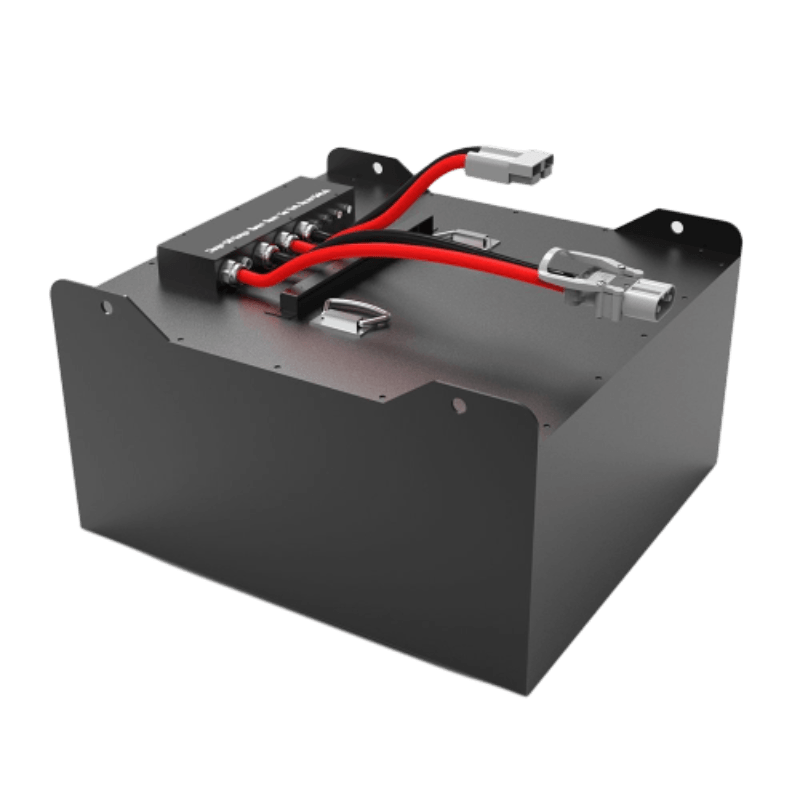
As a source factory specializing in the research and development and production of industrial vehicle power LiFePO4 batteries, we have developed a 48V 400Ah LiFePO4 battery specifically customized for the Heli CPD10. It strictly matches the original lead-acid battery across all dimensions, achieving a true 100% plug-and-play replacement. No body modifications, wiring changes, or controller adjustments are required — simply install and use. This article will thoroughly break down the original Heli CPD10 battery specifications, the core limitations of lead-acid batteries, the lithium replacement solution, pitfalls to avoid, and frequently asked questions, providing a one-stop solution for Heli CPD10 users seeking battery upgrades.
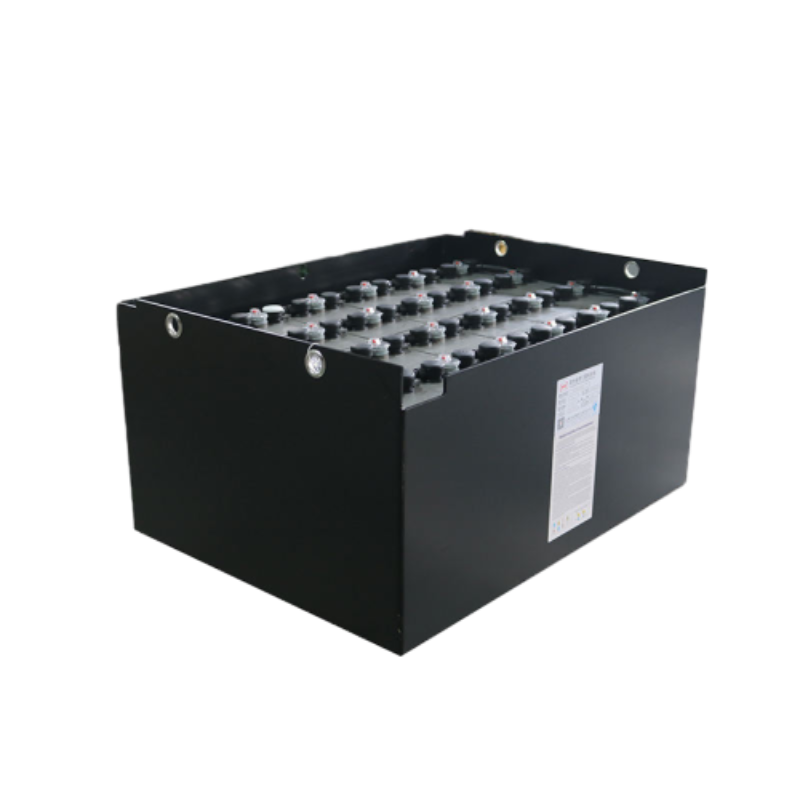
Precise Matching: Complete Specifications of the Original Heli CPD10 Electric Forklift Lead-Acid Battery
To achieve a safe and perfect forklift battery replacement, the core premise is 1:1 matching of the original battery’s hard parameters. This is also the key foundation to avoid subsequent installation failures, electrical damage, and safety hazards. The original factory standard traction-type flooded lead-acid battery for the entire Heli CPD10 series has highly consistent core specifications, with only minor adjustments in installation dimensions for a few specific models. The specific parameters are as follows:
- Rated Voltage: 48V The original battery consists of 24 pieces of 2V lead-acid cells connected in series, with a full-charge voltage of approximately 55.2V and a discharge cut-off voltage of approximately 42V. This parameter determines the voltage tolerance threshold of the forklift’s entire electrical system. The replacement battery must strictly maintain the 48V nominal voltage. Randomly replacing it with non-standard voltages such as 51.2V, 60V, or 72V will directly burn out the original controller, drive motor, instrument panel, and other core electrical components, resulting in high repair costs.
- Rated Capacity: 400Ah (5-hour rate) The industry-standard matching model is 4PZS400, which is the mainstream standard capacity for the full range of Heli CPD10 models, including the standard version, narrow-body Z1 version, and cold-storage L version. It perfectly matches the rated power requirements of the forklift drive motor and lifting motor.
- Installation External Dimensions The battery compartment dimensions for the standard body version are: length 970mm × width 600mm × height 465mm. For the narrow-body CPD10-Z1 version, the dimensions are: length 890mm × width 660mm × height 515mm. This parameter is the core limitation for physical battery installation. Any dimensional deviation will cause the battery to fail to fit into the compartment, fail to be secured, or experience shaking and wear during operation.
- Total Group Weight: Approximately 308kg The forklift’s lead-acid battery is not only the power source but also an important component of the vehicle’s counterweight system. The battery weight directly affects the front-rear balance during full-load operation. Insufficient weight will cause the forklift to lift its nose or tip over when fully loaded, leading to serious safety accidents and non-compliance with special equipment safety regulations.
- Standard Output Interface: SB175A Gray Connector The original wiring harness is equipped with a straight-plug interface. No wiring or cutting is required for docking, which is the core detail for achieving quick replacement.
The above five parameters are the hard standards that cannot be changed when replacing the Heli CPD10 forklift battery. Our 48V 400Ah LiFePO4 battery is precisely developed as a one-to-one custom match to these parameters, achieving true plug-and-play replacement at the root level.
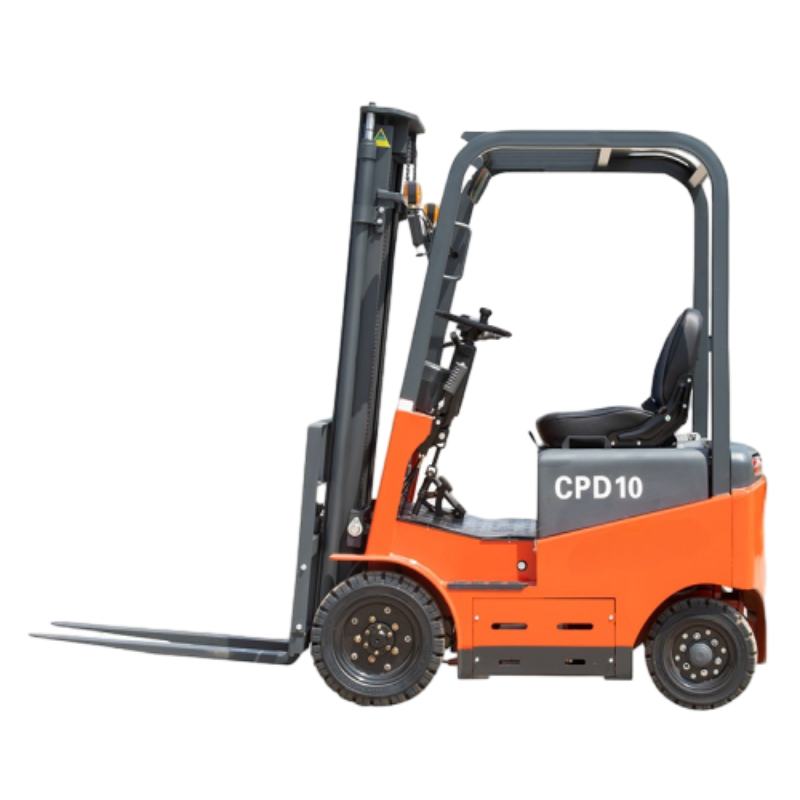
Core Limitations of the Original Heli CPD10 48V 400Ah Lead-Acid Battery
Although the 48V 400Ah lead-acid battery is the factory standard for the Heli CPD10, its inherent defects are continuously magnified in actual high-intensity, high-frequency industrial operations, becoming the core reason why more and more users choose to upgrade to Baterias LiFePO4:
- Short Cycle Life, High Replacement Frequency, and High Procurement Costs Under a safe 50% discharge depth, lead-acid batteries can only achieve 800–1,200 effective cycles. In normal two-shift operation conditions, the service life is only 2–3 years. In high-intensity operation scenarios, replacement may be needed after just one year. Frequent battery procurement not only continuously increases the enterprise’s fixed expenditure but also causes unplanned forklift downtime, affecting logistics peak seasons and production peak periods, resulting in hidden losses.
- Complicated Maintenance Process and High Labor and Management Costs Flooded lead-acid batteries require regular addition of distilled water, checking of electrolyte specific gravity, and cleaning of acid mist corrosion on the vehicle body and wiring harness. At the same time, corrosive acid mist is produced during charging, requiring a dedicated ventilated charging room. This not only occupies site resources but also requires dedicated personnel for maintenance management. For multi-fleet operating enterprises, the annual labor and site costs for battery maintenance are a significant expense. If maintenance is not performed properly, problems such as battery leakage, bulging, and premature scrapping can also occur.
- Virtual Marked Available Capacity and Insufficient Endurance The safe discharge depth of lead-acid batteries is only 50%, meaning that the actual usable capacity of the original 400Ah lead-acid battery is only about 200Ah. In daily operations, there are frequent mid-shift power cuts and the need for supplemental charging, seriously affecting operational continuity.
- Extremely Low Charging Efficiency, Unable to Adapt to Efficient Operation Requirements The full charging time for lead-acid batteries is as long as 8–10 hours, and high-current fast charging is not possible. Fragmented time during lunch breaks or shift changes cannot be used for supplemental charging. Two-shift operations must be equipped with two sets of spare batteries for rotation, further increasing equipment investment and management costs.
- Obvious Power Output Attenuation and Low Operating Efficiency The output voltage of lead-acid batteries decreases rapidly with power consumption. In low-power states, forklifts exhibit obvious power shortages during full-load lifting and climbing, with slower lifting speeds and insufficient climbing force, directly reducing single-operation efficiency.
- High Environmental Compliance Risks and Troublesome Scrapping Process During use, lead-acid batteries have risks of acid mist leakage and lead pollution, which do not comply with increasingly strict environmental regulatory requirements. Once leakage occurs, environmental penalties may be faced. At the same time, scrapped batteries require special recycling by qualified institutions, with a complicated process and high recycling costs.
Perfect Adaptation: How Our 48V 400Ah LiFePO4 Battery Achieves 100% Plug-and-Play Replacement
As a source factory with 10 years of experience in the research and development and production of industrial vehicle power lithium batteries, we have tailor-made a dedicated LiFePO4 battery pack for the original Heli CPD10 48V 400Ah lead-acid battery, achieving perfect matching across all dimensions from the electrical system, mechanical structure, safety protection, and working condition adaptation, truly realizing zero-modification and direct replacement.
1. 100% Compatible Electrical System – No Damage to the Vehicle, No Wiring Changes, No Parameter Adjustments
O nosso 48V 400Ah LiFePO4 battery uses 15 series-connected 3.2V automotive-grade power LiFePO4 cells, with the nominal voltage strictly controlled at 48V and a full-charge voltage of 54.75V, which is almost exactly the same as the original lead-acid battery’s full-charge voltage of 55.2V. It perfectly matches the overvoltage and undervoltage protection thresholds of mainstream original vehicle controllers such as Curtis, without the need to flash programs or adjust any electrical parameters, completely eliminating the risk of overvoltage damage to electrical components.
The battery’s rated capacity is 400Ah, supporting continuous 1C discharge and peak 3C high-current output, with continuous discharge current ≥400A and peak discharge current ≥1200A (30 seconds), fully meeting the peak power requirements of the CPD10 forklift’s 8.2kW drive motor + 10.6kW lifting motor. Under full-load lifting, climbing, and rapid acceleration conditions, there is no voltage drop, and the power output is more stable and stronger than the original lead-acid battery. At the same time, it is equipped with an industrial-grade forklift-specific BMS battery management system that supports CAN bus communication, perfectly matching the original vehicle controller and instrument panel to achieve real-time synchronous display of SOC power, voltage, temperature, and fault codes, completely solving the industry pain points of inaccurate power display and abnormal shutdowns in ordinary lithium batteries.
2. Mechanical Structure Plug-and-Play Adaptation – Zero Modification and Fast Installation
We strictly design the battery pack housing according to the original Heli CPD10 battery compartment dimensions. The standard version dimensions are 970mm × 600mm × 465mm, and the narrow-body version customized dimensions are 890mm × 660mm × 515mm. The battery can be directly placed into the original vehicle battery compartment without any cutting, welding, or drilling modifications to the vehicle body. It fully matches the original factory fixing hole positions for convenient and efficient installation. At the same time, it is equipped with the same SB175A gray connector as the original factory, without the need to modify the original vehicle wiring harness. The entire replacement process can be completed in only 30 minutes, allowing the forklift to quickly return to operation without affecting normal production.
3. Counterweight Optimization Design – Compliant with Safety Regulations and Eliminates Safety Hazards
In response to the lightweight characteristics of LiFePO4 batteries, we have built customized counterweight blocks inside the battery pack housing, making the total group weight exactly the same as the original lead-acid battery’s 308kg. This perfectly matches the forklift’s counterweight balance requirements, completely solving the safety risks of forklift nose-lifting and tipping during full-load operation caused by ordinary lithium batteries being too light, fully complying with special equipment safety regulations without the need for additional forklift counterweight adjustments.
4. Industrial-Grade Protection Design – Adapts to All-Scenario Operation Requirements
O nosso 48V 400Ah LiFePO4 battery pack adopts an IP65 protection-grade housing with excellent dustproof, waterproof, and oil-resistant performance. The cell and PACK structure have undergone professional anti-vibration and anti-impact design, complying with GB/T 38661 industrial vehicle battery standards, perfectly adapting to forklift bumping, frequent start-stop, and high-load operation scenarios. For the subdivided models of the CPD10, we also provide exclusive customized solutions: the cold storage version is equipped with -30°C low-temperature dedicated cells and low-temperature protection BMS, and the explosion-proof version is equipped with dedicated explosion-proof lithium batteries that comply with national explosion-proof standards, ensuring all series models can be safely adapted.
Value Upgrade: Six Core Advantages of Replacing with the 48V 400Ah LiFePO4 Battery
Upgrading to our specially customized 48V 400Ah LiFePO4 battery for the Heli CPD10 not only completely solves all the pain points of the original lead-acid battery but also brings comprehensive operational upgrades for enterprises from the four dimensions of cost reduction, efficiency improvement, safety, and compliance:
- Ultra-Long Service Life – Full Lifecycle Performance Significantly Improved We use first-line brand A-grade power-type LiFePO4 cells. Under 80% discharge depth, more than 3,000 effective cycles can be achieved, with capacity retention rate ≥80%. Under normal operating conditions, the service life can reach 5–8 years, which is 3–5 times that of the original lead-acid battery. There is no need for frequent battery replacement, greatly improving the overall performance of the forklift throughout its lifecycle.
- True Zero Maintenance – Significantly Reduced Labor and Management Burden The battery pack adopts a fully sealed design with no acid mist leakage or electrolyte loss, completely maintenance-free. There is no need for regular water addition, electrolyte specific gravity testing, or dedicated ventilated charging rooms, and no dedicated personnel are required for maintenance. This greatly reduces labor and site resource consumption while reducing unplanned downtime caused by battery failures.
- Significantly Increased Usable Capacity – Doubled Endurance The safe discharge depth of LiFePO4 batteries can reach 80%, so the actual usable capacity of the 400Ah battery reaches 320Ah, which is 1.6 times that of the original 400Ah lead-acid battery. Endurance capacity is significantly improved, completely solving the problems of mid-shift power cuts and frequent supplemental charging.
- Supports Fast Charging – Adapts to Efficient Operation Needs The battery charging conversion efficiency reaches more than 95% and supports 2–3 hour fast charging. Fragmented time during lunch breaks or shift changes can be used for supplemental charging, achieving opportunity charging. Two-shift operations no longer require spare batteries, further reducing equipment investment and management burden.
- Stable Power Output Throughout – Improved Operation EfficiencyBaterias LiFePO4 have a stable voltage platform. Whether at full charge or low power state, they can maintain stable voltage output, completely solving the power attenuation problem of lead-acid batteries at low power. Full-load lifting and climbing speeds remain consistent, greatly improving single-operation efficiency.
- Safe and Environmentally Friendly – No Compliance Risks The LiFePO4 chemical system has excellent thermal stability, with a thermal runaway temperature far higher than other lithium battery types. It does not catch fire or explode. The supporting industrial-grade BMS has full-dimensional protection functions, ensuring safety throughout use. At the same time, there is no acid mist or lead pollution, complying with RoHS, CE, UL and other international certifications, with simple scrapping and recycling processes and no environmental penalty risks.
Pitfall Avoidance Guide: Four Major Red Lines That Must Be Avoided When Replacing Heli CPD10 Lead-Acid with Lithium
In the process of forklift lead-acid to lithium conversion, many users have chosen non-compliant products, leading to safety accidents and equipment damage. Combining many years of industry experience, we have summarized four red lines that must not be touched — these are also the principles we strictly follow in product design:
- Strictly Prohibit Changing the System Rated Voltage: The battery must use the 48V nominal voltage. It is strictly prohibited to use 16-series 51.2V or higher voltage batteries, as exceeding the original vehicle controller’s voltage tolerance range can easily burn the entire vehicle electrical system and cause high repair costs.
- Strictly Prohibit Ignoring Battery Compartment Size Matching: The replacement battery must strictly refer to the original factory battery compartment dimensions to avoid installation failure, battery shaking and wear on the wiring harness during operation, or short-circuit fire risks caused by dimensional deviation.
- Strictly Prohibit Ignoring Counterweight Balance Requirements: Do not pursue only the lightweight nature of lithium batteries. The total group weight of the battery must be close to the original factory 308kg; otherwise, it will cause the forklift to nose-lift or tip over during full-load operation, leading to serious safety accidents.
- Strictly Prohibit Mixing Lead-Acid Chargers: The original lead-acid charger uses a three-stage charging logic, which does not match the constant-current and constant-voltage charging mode of LiFePO4 batteries. Mixing them will cause battery overcharging, bulging, or even thermal runaway fire. A dedicated LiFePO4 smart charger matched with the battery BMS must be used.
Perguntas frequentes sobre as pilhas recarregáveis personalizadas
Can Yibai lithium batteries be used directly in the original Heli CPD10 forklift without any modifications?
Yes. Our 48V 400Ah LiFePO4 battery is designed as a 100% drop-in replacement — same voltage, same physical dimensions, same connector type (SB175A gray), and same total weight. No wiring changes, no controller reprogramming, no counterweight adjustments are needed.
Do lithium batteries really perform well below -20°C in frozen warehouses?
Yes. Yibai LiFePO4 batteries are engineered to maintain stable power output and do not suffer significant capacity loss in low-temperature environments, unlike lead-acid batteries. We also offer a low-temperature optimized version for -30°C continuous operation.
How long can I expect a Yibai lithium forklift battery to last in daily cold storage use?
In typical two-shift refrigerated warehouse operations, Yibai LiFePO4 batteries commonly deliver many years of service life with very consistent daily runtime — far longer than traditional lead-acid batteries under the same conditions.
Do I need to replace my existing lead-acid charger when switching to Yibai lithium batteries?
Yes, you must use a charger specifically matched to LiFePO4 chemistry. Using a lead-acid charger can cause charging problems and reduce battery life. We provide compatible smart chargers with every battery pack.
What safety features are included in Yibai lithium forklift batteries?
Our packs include industrial-grade BMS with multiple layers of protection (overcharge, over-discharge, over-current, short-circuit, temperature), an integrated fire suppression module, and full compliance with UN 38.3 transportation safety standards.
Why Choose Our 48V 400Ah LiFePO4 Battery?
As a source factory in China specializing in the research and development and production of industrial vehicle power lithium batteries, we have more than 10 years of experience in forklift lithium battery matching and have provided battery upgrade solutions for more than 1,000 warehousing logistics and manufacturing enterprises nationwide. We are a long-term cooperative supporting supplier for many Heli forklift dealers.
Our products undergo strict quality control throughout the entire process. Every battery pack is subjected to more than 20 rigorous tests, including charge-discharge cycles, vibration, high and low temperature, and short-circuit protection, before leaving the factory to ensure stable and reliable product performance. With the direct supply model from the source factory, there are no middlemen markups, prices are transparent and controllable, and we can provide exclusive customized services according to the user’s specific models and operating conditions. Our professional technical team provides one-to-one full-process follow-up to solve all user concerns.
Conclusion
The factory standard battery for the Heli CPD10 electric forklift is the 48V 400Ah traction-type lead-acid battery. Its core parameters — 48V rated voltage, 400Ah rated capacity, 970mm×600mm×465mm standard dimensions, approximately 308kg total group weight, and SB175A standard interface — are the only standards for battery replacement. Our produced 48V 400Ah LiFePO4 battery strictly matches all specification parameters of the original lead-acid battery, achieving full-dimensional adaptation in electrical system, mechanical structure, and safety protection, truly realizing 100% plug-and-play replacement.
Upgrading to our LiFePO4 battery will completely free enterprises from all the pain points of lead-acid batteries, providing longer service life, zero maintenance, doubled endurance, stable power output, and safer and more environmentally friendly use experience, greatly reducing the full lifecycle operating costs of forklifts. If you are looking for a stable, reliable, and high-performance lead-acid battery replacement solution for the Heli CPD10, welcome to contactar-nos for detailed product parameters, exclusive quotes, and one-to-one technical support.
 English
 Arabic
 Spanish
 Portuguese
 German
 Russian
 Turkish
 French
 Italian
 Japanese
 Hungarian
 Polish
 Ukrainian
 Hebrew